Mostly harmless, universally unwelcome. The Pacific Northwest has fewer dangerous species than people believe.
Most large brown house spiders on this peninsula are giant house spiders, not something dangerous. Black widows exist in Washington but are genuinely rare on the Olympic Peninsula and prefer undisturbed dry sites like woodpiles and outbuildings. Brown recluse do not live here at all — they are not established in Washington, despite constant misidentification. If a spider is fast, brown, and about the size of a coin including legs, it is almost certainly harmless.
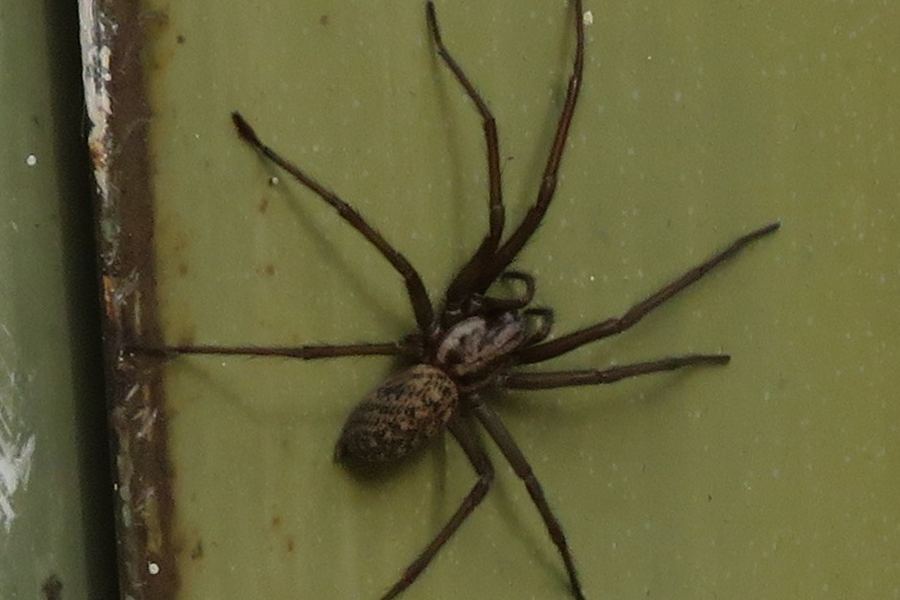
Large, fast, brown, long-legged. The one that sprints across the floor in autumn. Harmless, and it actually competes with less desirable species.
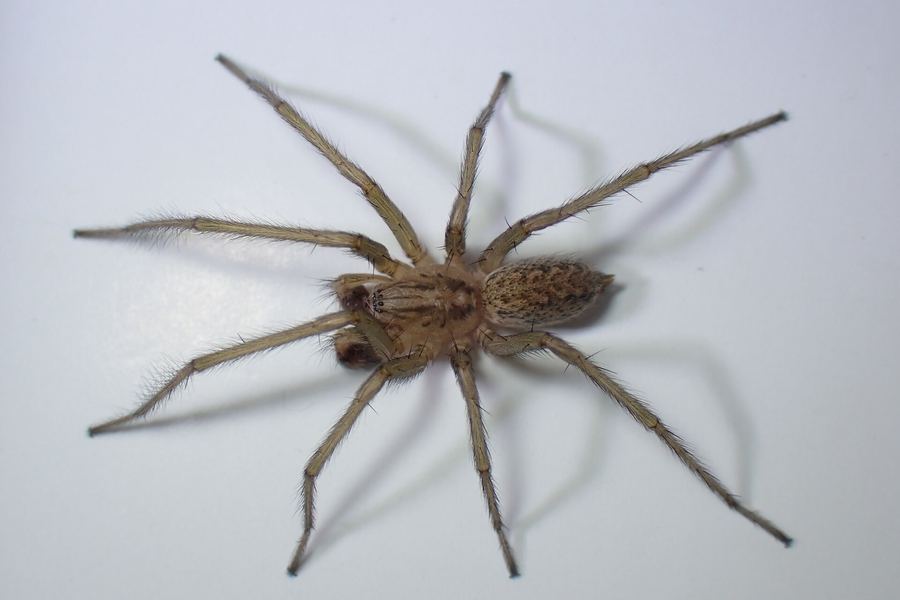
Similar in appearance to the giant house spider and frequently misidentified. Current research does not support the old necrotic-bite claims.
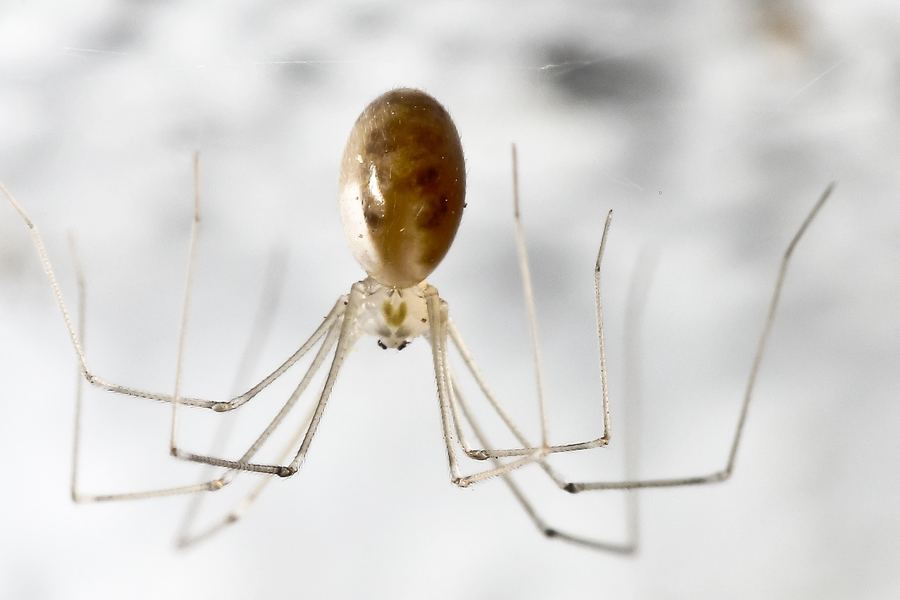
Very thin legs, messy webs in corners and crawlspaces. Completely harmless.
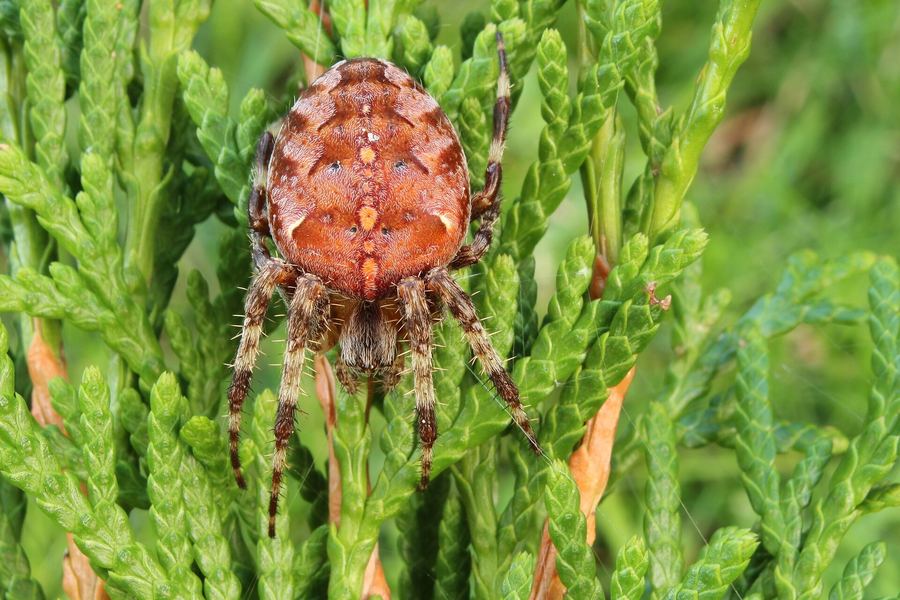
Builds the classic circular web on porches and eaves each autumn. Beneficial and harmless.
Autumn spider season on the peninsula is driven by mating, not by cold. Males that lived outdoors all summer start wandering in search of females, which is why they suddenly appear crossing floors in September. Forest-edge properties — Blyn, Port Ludlow, Joyce, Diamond Point — see far more of this than open-ground homes in the Dungeness Valley. Shoreline properties get an additional wave from driftwood and beach grass at the tideline.
Perimeter treatment plus physical web knockdown works well, and the knockdown genuinely matters — removing webs and egg sacs is at least as effective as the chemistry. Spiders do not groom the way insects do, so they pick up less residual product; that is exactly why the mechanical removal is part of the service rather than an upsell.
Call us when: Webs return within a week of removal, you find egg sacs indoors, or you have a confirmed black widow in an outbuilding or woodpile.
Most large brown house spiders on this peninsula are giant house spiders, not something dangerous. Black widows exist in Washington but are genuinely rare on the Olympic Peninsula and prefer undisturbed dry sites like woodpiles and outbuildings. Brown recluse do not live here at all — they are not established in Washington, despite constant misidentification. If a spider is fast, brown, and about the size of a coin including legs, it is almost certainly harmless.
Year-round indoors, with a sharp spike in September and October. Autumn spider season on the peninsula is driven by mating, not by cold. Males that lived outdoors all summer start wandering in search of females, which is why they suddenly appear crossing floors in September. Forest-edge properties — Blyn, Port Ludlow, Joyce, Diamond Point — see far more of this than open-ground homes in the Dungeness Valley. Shoreline properties get an additional wave from driftwood and beach grass at the tideline.
Perimeter treatment plus physical web knockdown works well, and the knockdown genuinely matters — removing webs and egg sacs is at least as effective as the chemistry. Spiders do not groom the way insects do, so they pick up less residual product; that is exactly why the mechanical removal is part of the service rather than an upsell.
Exterior lighting, which concentrates the insects spiders feed on. Dense shrubs, ivy, and ground cover against the foundation. Cluttered garages, crawlspaces, and outbuildings. Woodpiles and stacked materials near the structure. Any building sitting at a forest edge.
Webs return within a week of removal, you find egg sacs indoors, or you have a confirmed black widow in an outbuilding or woodpile.
Flat contract pricing, and we answer the phone locally. Tell us about the property and we'll get you a number.
Or call (360) 670-3367 — we answer locally.


_Araneus_diadematus.jpg)